shio, shoyu, miso, tonkotsu: a crash course in ramen styles
*(or: what all the words on our menu actually mean)*
hey! we thought we'd write a bit about tares, styles, definitions, and what all the words actually mean, for anyone who finds it a bit confusing.
we've never really done anything like this before because: imposter syndrome. who are we to explain ramen? but a few things recently have made us question how much that voice gets to run things. so here goes.
the map everyone knows
shio, shoyu, miso, tonkotsu. that's the map most of us get outside japan, and it's fair enough — the tare really does define the bowl. usually.
but the first three are seasonings and tonkotsu is a broth, so it's a slightly wonky map. (quick definition: **tare** is the intense, concentrated seasoning at the bottom of the bowl that everything else sits on. the broth is a whole separate decision.)
in japan, 100 years of regional history did the real work: tokyo built some of japan's earliest bowls around incredible soy sauce and, often, chickens. in hakata they boil their pork bones down into tonkotsu paitan. in yokohama they crossed the two and got iekei.
miso: the deep one
in sapporo, in the ice-cold north, they built ramen around miso — a bowl designed to get you through a hard working day, the result of hokkaido workers asking for noodles in their miso soup to add calories.
miso tare is our most complex tare at matsudai. it's not just miso stirred into broth: a good one is incredibly layered. ours has more components than we'd ever admit to publicly — multiple misos pulling in different directions, sweetness, heat, nuttiness, umami stacked on umami. it's the tare we're proudest of and the one that takes longest to make.
shio: nowhere to hide
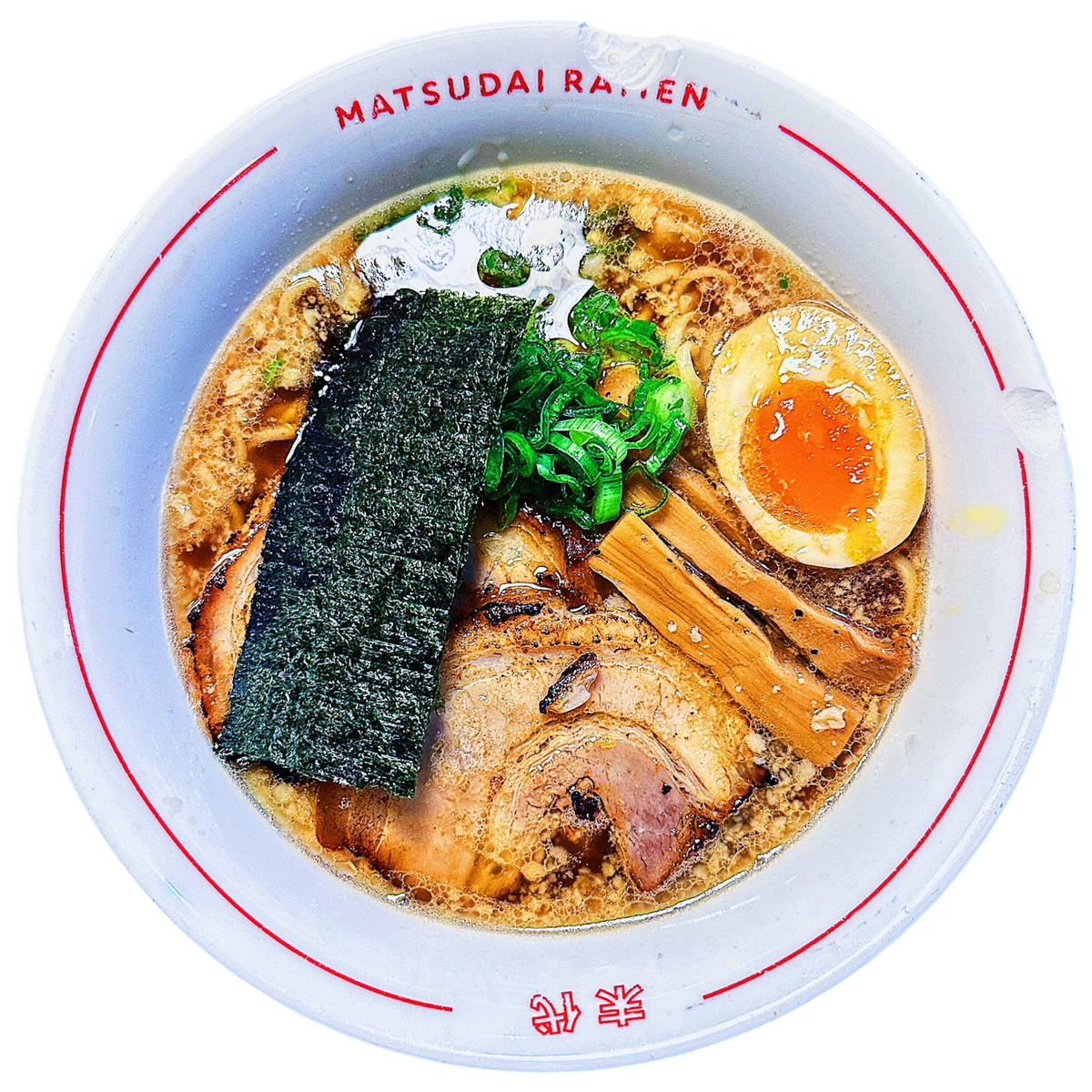
then there's shio — "salt". that sounds basic af, but shio is the oldest tare and the least understood — the lightest seasoning, but not necessarily the simplest, and the one which means there is absolutely nowhere to hide. every element of the bowl is exposed. plenty of shops don't touch it, but when it's done with real care, it's arguably the most elegant style in ramen, and quietly the biggest flex on a menu.
tantanmen: the rule-breaker
then tantanmen comes along and ignores the whole system. it's not really from the tare family tree at all — it's japan's adaptation of sichuan dan dan noodles. sesame, chilli, some tingle. soy sauce, often, but sometimes miso and sometimes even shio. tantanmen and its million variants are proof that ramen has never been a closed book — borrowing, absorbing, evolving.
this is barely the start
of course, this isn't even close to exhaustive. we haven't touched tsukemen, abura soba, or the myriad regional styles japan has quietly perfected while the rest of us were still learning to say 'tonkotsu' (meaning pork bone) instead of tonkatsu (meaning pork cutlet).
if you found any of this useful — or you want us to go deeper on noodles, broth, or toppings — email us at hello@matsudai.co.uk and tell us. we'll write more if it's not a total waste of everyone's time.
want to taste the difference rather than just read about it? you know what to do. pick up a kit or book a table at our restaurant in cardiff, and thank us later...
jc + team matsudai x